A Slow Sunday Lunch with a Flexible Menu
Plan a slow Sunday lunch around one dependable centrepiece, a make-ahead dish and flexible sides, so the meal can unfold without a rigid timetable.
The common mistake with a slow Sunday lunch is planning every dish as if it must reach the table at once. That turns a relaxed meal into a kitchen deadline: the roast waits while the vegetables finish, or guests arrive to find you still juggling pans. A flexible menu gives the meal an anchor and lets the rest adapt to appetite, arrival times and the pace of conversation.
Build the menu around one dependable centrepiece
Choose one main dish that can tolerate a little variation in timing. A braise, a tray of roasted vegetables with chickpeas, a baked fish dish or a pie that can rest before serving can all work. The best choice is not necessarily the most elaborate. It is the one you can prepare with confidence and that still makes sense if lunch starts later than planned.
Think of the centrepiece as the meal’s anchor, not a signal that every other dish must be equally substantial. If you are making a rich beef and root-vegetable stew, for instance, a sharp salad and bread may be enough alongside it. If the centrepiece is a lighter baked fish, roast potatoes or buttered beans can provide a more filling counterpoint.
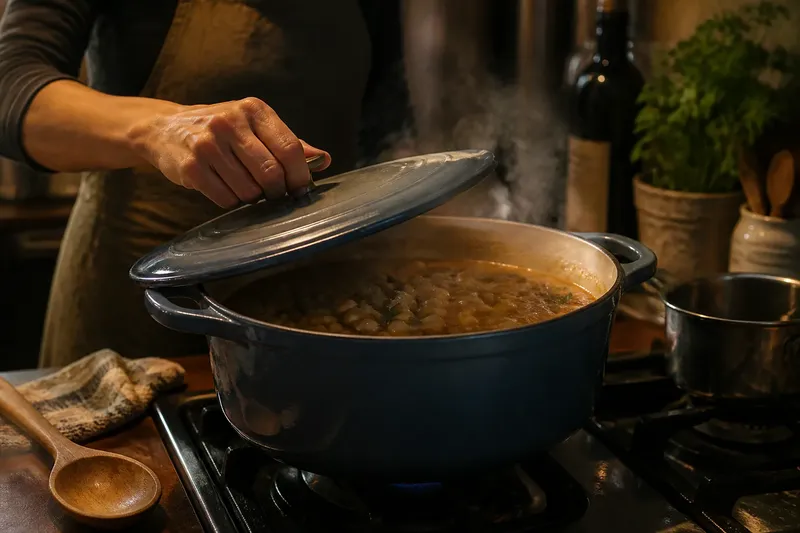
Choose a dish whose finishing point is forgiving. A stew can sit covered off the heat while people settle in; a whole roast can rest before carving. Delicate foods that need immediate attention may still belong on a Sunday table, but they make a less accommodating anchor if the schedule is uncertain.
Give the menu a make-ahead companion
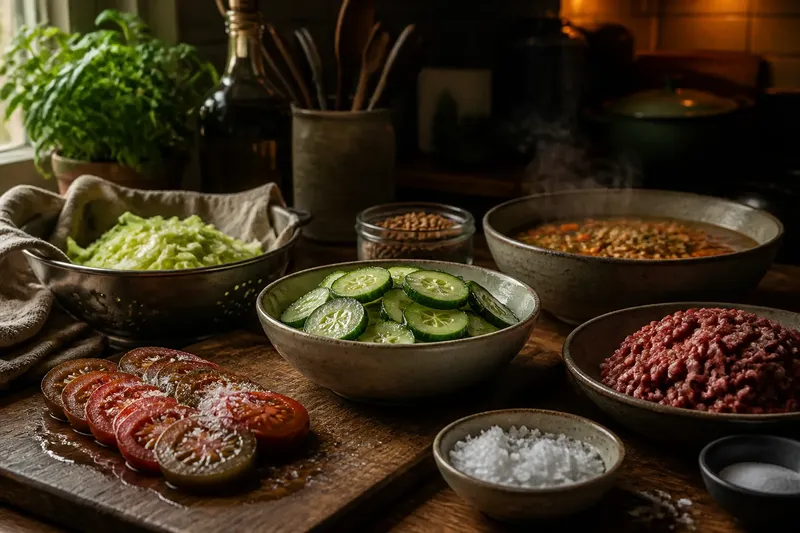
Pair the centrepiece with one element that can be finished before guests arrive. This might be a bowl of dressed lentils, a dish of roasted carrots served at room temperature, a pudding chilled in the fridge, or a green salad washed and spun dry, with its dressing kept separate. The point is to move a task out of the busiest part of the meal, not to fill the table with dishes prepared days in advance.
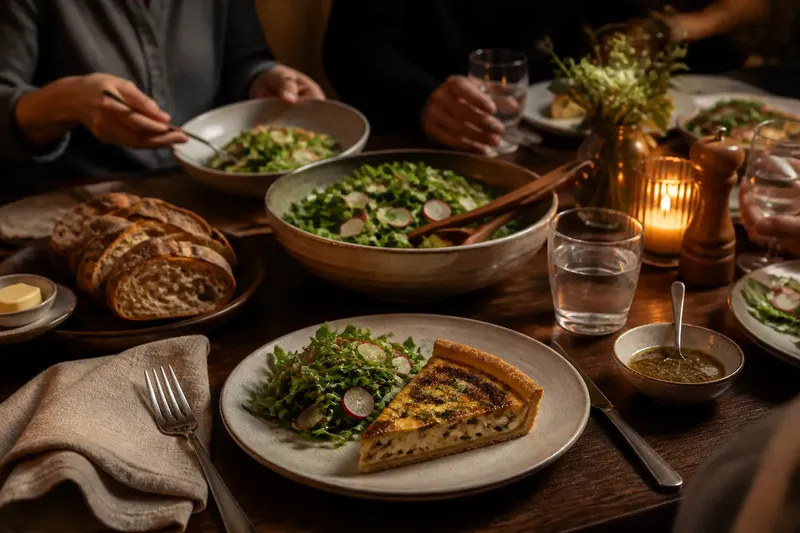
Choose the companion for contrast as well as convenience. A creamy pie can sit beside a crisp cabbage salad; a slow-cooked dish may welcome a bright herb sauce. A make-ahead dish can also cover a practical need: if the main course is rich, something fresh can keep the meal from feeling heavy.
Keep its final assembly simple. Put serving spoons beside the lentils, set the sauce in a small jug, or leave the salad dressing in a jar for a quick shake. If a dish needs a last-minute adjustment, make that adjustment optional: offer lemon wedges or chopped parsley at the table rather than creating another pan to manage.
Choose sides that can change with the day
Flexible sides are dishes that remain useful if the main course is delayed or the guest list changes. A bowl of boiled potatoes can be served warm with butter, or left to cool and turned into a simple salad. Bread can accompany soup, stew or cheese. A platter of sliced vegetables works as a starter and can return later if lunch stretches on.
Rather than assigning every side a fixed place, ask what job it can do. A green salad might freshen the main course, while a plate of olives and bread gives early arrivals something to nibble. A bowl of fruit or a simple cake can follow lunch without demanding a precise handover from the oven.
This does not mean making every item serve every purpose. It means avoiding a menu where one late dish leaves a conspicuous gap. When two parts of the meal can be served independently, you have more choice about when to bring them out.
Plan the handoffs, not a rigid timetable
A useful plan names what needs doing and what can wait. Write down the centrepiece’s preparation, the make-ahead dish, any oven use and the moment you want to set the table. Then mark each task as either time-sensitive or flexible. This short list helps you spot a clash, such as needing the oven for both potatoes and a cake at the same time.
Keep the serving order loose. Put out a small snack when people arrive, serve the main meal once the centrepiece is ready, and bring dessert when conversation naturally pauses. A meal can feel intentional without everyone sitting down at a pre-set minute.
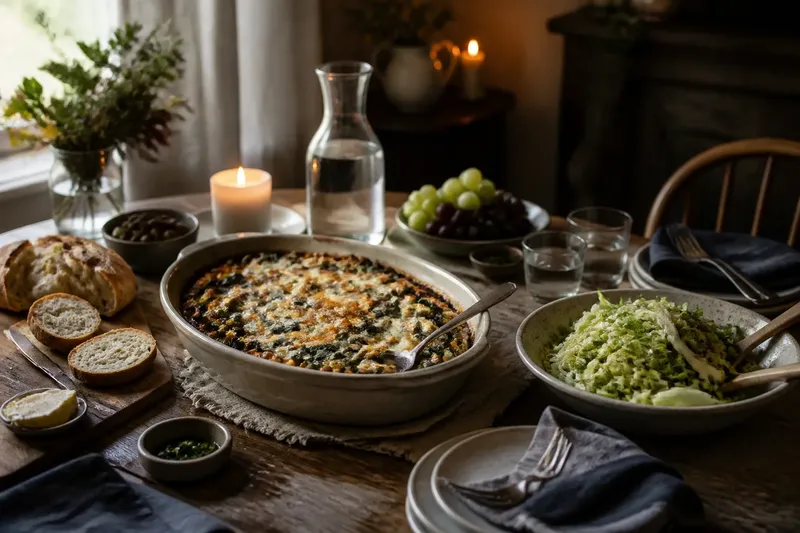
Say you are planning lunch for a few friends and choose a vegetable-and-bean gratin as the centrepiece. You make a lemony cabbage salad earlier, wash grapes for dessert and set bread on a board. If one guest arrives late, the salad and grapes can wait, while the gratin rests briefly; the observable result is that no separate dish needs to be rushed just to keep the menu intact.
Make room for different appetites and preferences
A flexible menu is easier to share when guests can make small choices for themselves. Put a bowl of extra greens or bread on the table, offer a dressing separately, and keep a simple alternative available if someone does not eat the centrepiece. That alternative need not become a second full meal: beans, eggs, cheese, or a substantial salad may suit the menu, depending on the guests and their needs.
Ask about dietary requirements before settling the menu, then check ingredient labels and follow relevant product instructions or local food-safety guidance where needed. If a guest has an allergy or a medical dietary requirement, clarify what they can safely eat rather than guessing from a dish’s name.
Keep seasonings and finishing touches easy to adjust at the table. A jar of mustard, a dish of chopped herbs or a bowl of grated cheese lets people tailor a serving without requiring a second version of the main dish. These are small options, not a substitute for accommodating a known dietary need.
How can Sunday lunch stay relaxed?
What makes a good centrepiece for a slow lunch?
Choose a dish that you can prepare reliably and that does not depend on a split-second serving window. Braises, pies and many baked dishes can wait briefly, giving you room to greet guests and set out the rest of the meal.
What should be made ahead?
Make ahead a dish that benefits from resting or needs little attention at serving, such as a pudding, a sauce or a robust salad component. Keep delicate leaves and their dressing apart until you are ready to serve so they stay pleasant to eat.
How many dishes should a flexible menu include?
There is no required count; choose enough to make a satisfying meal without giving yourself a separate finishing job for every course. One centrepiece, one prepared-ahead companion, a simple side and an easy dessert can be plenty.
What if lunch starts later than expected?
Serve a modest snack or bread while the centrepiece finishes, and leave the dishes that tolerate waiting covered or chilled as appropriate. Bring out the remaining food when it is ready rather than trying to recover a timetable that no longer fits.
Let the last dishes be optional
End the meal with an easy choice rather than another timed production. Fruit, biscuits, a cake made earlier or tea and coffee can follow whenever people are ready. If lunch has been filling, there is no need to serve every planned extra; keeping dessert simple means it can remain an invitation, not another obligation.
For a slow Sunday lunch, the useful planning question is not how to make every dish arrive together. Ask instead which dish needs your attention, which one can be ready in advance, and what can wait until the table is ready for it. That is the small shift that makes a flexible menu feel considered rather than improvised.