What Salt Does Before It Tastes Salty
Learn what salt does before it tastes salty, from drawing water out of vegetables to changing texture, so you can season with more control.

The common mistake with salt is waiting until food tastes bland, then adding a heavy pinch at the end. That can make a dish taste sharply salty without giving ingredients time to change; understanding what salt does before it tastes salty helps you decide when to season and when salt is being used for something else.
What does salt do before it tastes salty?
Salt first dissolves in moisture, then its ions move through that moisture and interact with the food. Depending on the ingredient and the time available, this can alter how much water sits at the surface, how proteins behave, or how readily other flavours register.
In a soup, a little salt can make vegetable, herb and stock flavours seem clearer before the broth tastes distinctly salty. In a bowl of sliced cucumber, salt draws moisture to the surface; leave it there and the pieces become wet and less crisp. These are different effects, so the useful question is not simply “How much salt?” but “What change am I asking for?”
Salt does not replace acidity, sweetness or aroma. A squeeze of lemon can brighten a dish in a way salt cannot, while fresh herbs add fragrance rather than saltiness. Taste for the particular quality that is missing before reaching for the salt cellar.
When should I season for flavour?
Season for flavour when the aim is to make a dish taste balanced, not to draw out moisture or alter texture. Add salt in small amounts while cooking, then taste again as ingredients soften and liquid reduces. Water evaporates but salt remains, so a sauce that tastes just right early on may become too salty as it thickens.
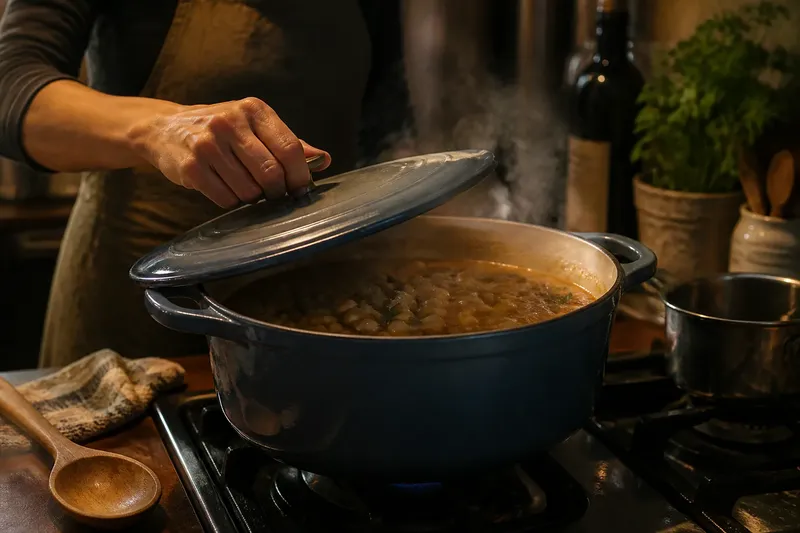
For a pot of lentil soup, season the cooking liquid lightly, then check the broth after the lentils soften and the vegetables release their flavour. Add another pinch only if the whole spoonful tastes muted. Finish with a little more if needed, rather than trying to correct the pot with a large late addition.
Use a small spoon for tasting and let hot food cool briefly on it. Heat can dull your judgement, and a taste from the surface may not represent a mixed pot. Stir first, then assess a spoonful with some liquid and solid ingredients together.
When is salt changing an ingredient’s character?
Salt is doing more than seasoning when it is used to manage moisture or texture. On sliced aubergine, for instance, salt brings water to the cut surfaces. That moisture can be blotted away before cooking, though whether this is useful depends on the recipe and the texture you want.
With cabbage, salt helps draw liquid from shredded leaves. In a quick slaw, that can soften the shreds and create a watery dressing if they sit too long. In a salted, rested preparation, the same softening can be the point: the leaves become more pliable and release liquid that can be drained or incorporated, depending on the dish.
Salt also affects proteins. In a burger mixture, salt worked through the meat can make the cooked texture more cohesive and springy. If a tender, loose texture is the goal, mix gently and avoid working the salt through the mince more than needed. For meat preparation, follow the recipe’s handling guidance and the package instructions.
How does timing change the result?
Timing determines how long salt has to dissolve and act. A brief sprinkle on tomatoes just before serving mainly seasons their surface, while an earlier sprinkle lets moisture collect around the slices. That liquid can be welcome in a tomato salad or undesirable on toast.
Imagine you are making a cucumber sandwich for lunch. If you salt the slices early and leave them in a bowl, they will release moisture before assembly; blotting them with kitchen paper helps keep the bread from becoming soggy. If you want crisp, freshly cut cucumber, wait and season the sandwich lightly just before eating.
For beans, grains and vegetables cooked in water, seasoning the cooking liquid can distribute flavour through the food as it cooks. For delicate items or dishes with salty additions such as olives, cheese or cured meat, start more cautiously and taste the finished combination before adding more.
Which salt should I use for cooking?
Choose salt by how you use it and how easily you can judge the amount. Fine table salt disperses readily and is convenient for mixing into liquids or dough. Coarser crystals are easy to pinch and scatter, but a spoonful can contain a different amount of salt depending on crystal size and how tightly it is packed.
Flaky salt is suited to a finishing pinch where its crisp crystals remain noticeable. It is not a direct measure-for-measure substitute for fine salt in a recipe. If changing salt types, add gradually and taste where possible; for baking, use the salt type and quantity specified because salt affects both flavour and dough behaviour.
Check the ingredient label and the manufacturer’s directions when a product has added ingredients or a recipe specifies a particular salt. Keep one everyday salt near the cooker and a separate small dish for finishing salt, so you can tell which one you are reaching for.
How can I tell whether a dish needs salt?
Taste a representative bite and name what seems absent. If the flavour is muted throughout, a little salt may help. If it already tastes savoury but feels heavy, a splash of vinegar or lemon may provide the lift you want; if it lacks fragrance, try herbs, toasted spices or citrus zest instead.
Ask yourself these questions before adding more:
- Is the food bland throughout? Stir it, taste again, and add a small pinch only if the overall flavour remains flat.
- Is the surface too wet? Drain or blot moisture if texture is the concern; extra salt may draw out more.
- Will the dish reduce? Wait to make the final adjustment until the liquid has thickened.
- Are salty ingredients already present? Taste a complete bite with cheese, olives or other additions before seasoning the whole dish.
The most reliable way to use salt is to decide whether you are seasoning the finished flavour or changing an ingredient’s texture, then give it the timing that purpose needs. Add cautiously, taste the food as it will be served, and remember that a liquid or a crisp slice can be part of the dish’s character rather than a problem to remove.